Shop Our Cold Plunges
RELAX-RENEW-REPEAT - Transform your recovery routine with professional-grade cold therapy.
Boost Circulation
Enhance blood flow and cardiovascular health
Muscle Recovery
Reduce inflammation and speed up recovery
Better Sleep
Improve sleep quality and relaxation
Mental Clarity
Sharpen focus and reduce stress




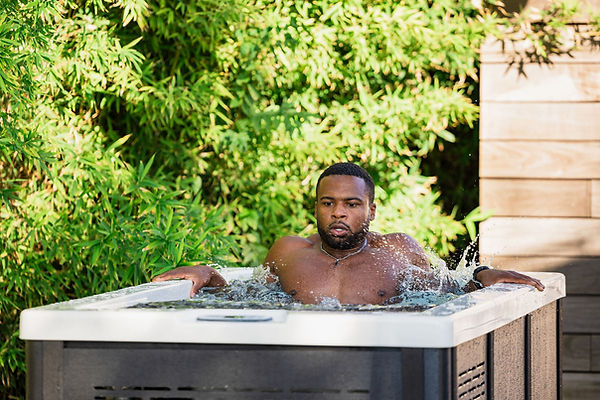
Should You Ice Bath Before or After Your Workout?
Everyone's talking about ice baths these days. But dive in at the wrong moment, and you could stall your gains instead of supercharging them. Here's how to time your cold plunge for the results you actually want.
What's a Cold Plunge, Really?
At its simplest, a cold plunge means settling into water between about 37-60 degrees F for a few minutes. It gives your body a jolt that kicks every system into gear:
- ●Blood-vessel squeeze: Vessels tighten to protect your core, sending warm blood to vital organs.
- ●Heart-and-lungs workout: Your heart rate and breathing spike as your body fights the chill.
- ●Metabolic roar: Everything revs up to keep you warm.
- ●Hormonal flood: Adrenaline and norepinephrine surge, sharpening your mind and dulling pain.
Why Ice Baths Feel So Good
Less Inflammation
By cooling inflamed tissue, ice baths dial back soreness after a hard session.
Circulation Boost
Squeezed-then-released vessels act like a pump that flushes toxins out of your muscles.
Instant Pain Relief
Cold numbs nerve endings, useful for stiffness, aches, or a quick pick-me-up.
Quicker Bounce-Back
With inflammation controlled and fresh blood flowing, you're ready for the next workout sooner.
Before vs. After: Timing Your Plunge
Ice First, Workout Second
Pros:
- - Great for training in hot weather
- - Cold shock sharpens focus, energy, and mood
Cons:
- - Cold muscles fire less explosively
- - Weaker lifts, slower sprints
Best for: battling heat or needing a wake-up jolt.
Workout First, Ice Next
Pros:
- - Immediate relief from post-session ache
- - Recover fast for back-to-back training
Cons:
- - Can blunt muscle-building inflammation signals
- - Regular cold dips after lifting may reduce gains
Best for: competition mode and rapid recovery needs.
Match Your Goal to Your Timing
Practical Tips
If you have heart issues or blood-pressure concerns, consult a healthcare pro before plunging.

Can Ice Baths Improve Your Skin?
From taming redness to reviving dull complexions, that shock of cold might be exactly what your skincare routine is missing. When your body hits cold water, it kicks into survival mode - and the results can supercharge your skin's repair and renewal.
The Science Behind Cold Water and Skin
When your body hits cold water, blood vessels tighten then rebound open as you warm up, flushing skin with nutrient-rich blood. Norepinephrine and dopamine reduce inflammation while your body burns extra energy maintaining core temperature - an indirect perk for healthier cell turnover.
Reduces Inflammation
Cold limits blood flow to inflamed areas. Ideal for acne flare-ups, rosacea, or irritated skin.
Boosts Circulation
Better blood flow delivers more oxygen and nutrients to cells for an instant glow and even skin tone.
Tightens Pores
A quick squeeze on pores keeps dirt and oil from settling. Regular sessions shrink pore appearance.
Collagen Production
Cold stress triggers repair pathways including collagen synthesis for firmer, plumper skin.
The takeaway: Ice baths deliver a powerful combo of reduced inflammation, turbocharged circulation, and collagen support. Start slow, stay consistent, and watch your complexion come alive.

What Size Chiller Do You Need?
Choosing the wrong size chiller can leave you waiting hours to hit your ideal temperature. Understanding horsepower vs. cooling capacity is the key to making a smart buying decision.
Horsepower vs. Cooling Capacity
When you see a chiller labeled as 0.3HP, 0.5HP, or 1HP, that refers to the compressor motor's power - not how much cooling it delivers. Think of horsepower like engine size in a car: more HP means it can potentially do more work, but doesn't tell you how efficiently it turns power into performance.
Cooling capacity, measured in BTU/hr, is the number that really matters. It tells you how much heat the chiller can pull out of your plunge tub per hour. More BTUs = faster cooling = colder water.
Chiller Comparison
| Chiller Model | Horsepower | Cooling (BTU/hr) | Time to 50 degrees F* |
|---|---|---|---|
| Rocita | 0.3 HP | 2,400 | 6-8 hours |
| Active Aqua | 0.5 HP | 4,020 | 4-6 hours |
| Icebound Pro | 1 HP | 9,309 | 2-3 hours |
*Based on ~80 gallon tub, ambient temp of 80 degrees F

What Else Affects Chiller Performance?
Filtration & Sanitation
Dirty water cools slower and can damage internal components. Ensure good integration with your filtration system.
Circulation
Poor circulation leads to uneven temperatures. A built-in or external water pump can solve this.
Ambient Conditions
Outdoor tubs in direct sunlight need more cooling capacity. Always factor in your environment.
Tub Size & Usage
How large is your tub? How often do you use it? Both impact what chiller you need.
Make a Smarter Buying Decision
Don't fall for the horsepower trap. The real measure of a chiller's performance is cooling capacity. By understanding these specs, you'll compare chillers based on what really matters, choose a model that fits your tub and lifestyle, and get better, faster cold plunges without wasting time or money.

Cold Plunge Water Maintenance
Whether you've got an all-in-one cold plunge with a built-in chiller or a simple inflatable ice bath, keeping that water clean is crucial for both your health and your equipment's longevity.
Key Takeaways
- Test water every 1-2 weeks: pH (7.2-7.8), alkalinity (80-120 ppm), sanitizer, calcium hardness
- Run circulation and filtration for at least 4 hours daily
- Clean filter every 2-3 weeks
- Change water every 3-4 weeks depending on usage
- Cover your cold plunge when not in use
- Colder water requires fewer chemicals but still needs regular maintenance
Understanding Your Cold Plunge Water
Your cold plunge isn't a pool, and it isn't a hot tub either. At roughly 100 gallons, it's much smaller than a pool (contaminants concentrate faster), but the cold temperature slows bacterial growth. However, cold water also slows chemical reactions, meaning sanitizers don't work as efficiently as in warmer water.
Water Testing Fundamentals
Too low = equipment corrosion. Too high = sanitizer becomes less effective.
Acts as a buffer to prevent pH from bouncing around.
Classic sanitizer. Less stable in cold water.
Works better in cold water than chlorine. Less smell.
Too little eats away at metal parts. Too much causes scaling.
Test every 1-2 weeks, or whenever you change your water. If something seems off (cloudy water, funky smell), test immediately.
Primary Sanitizer Options
Bromine
Works better in cold water than chlorine and doesn't have that strong pool smell. Aim for 3-5 ppm.
Chlorine
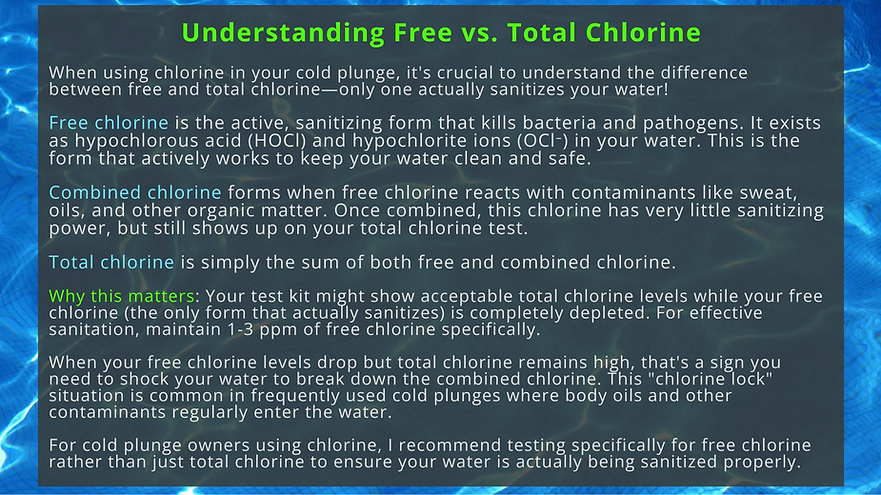
The classic sanitizer many people know. Effective but less stable in cold water. Maintain 1-3 ppm.
Hydrogen Peroxide
Food-grade (30-35%) sanitizes effectively, breaks down into water and oxygen. Won't irritate skin or eyes.
Filtration & Circulation
Your filter is the unsung hero of clean water. A good filtration system should run for at least 4 hours daily, remove particles as small as 5-20 microns, and be easy to access for cleaning.
Filter Cleaning Steps (every 2-3 weeks):
- 1Remove the filter
- 2Rinse thoroughly with a garden hose
- 3Soak in filter cleaner (or a capful of bleach in water)
- 4Rinse again until water runs clear
- 5Let dry and reinstall
Maintenance Schedule
Daily
- ●Run filtration 4+ hours
- ●Skim surface if needed
- ●Cover when not in use
Weekly
- ●Visual check of water clarity
- ●Brief filter inspection
Every 2-3 Weeks
- ●Test water chemistry
- ●Adjust chemicals as needed
- ●Clean/rotate filters
Every 3-4 Weeks
- ●Drain and refill
- ●Clean inner walls
- ●Rebalance chemicals
Troubleshooting Common Issues
Fix: Check filter, shock the water, ensure proper circulation
Fix: Use a defoamer, clean filter, remind users to shower before plunging
Fix: Check sanitizer levels, shock the water, ensure proper filtration
Fix: Test and adjust pH, check if sanitizer is within proper range
Cold Plunge, Clean Water, Better Recovery
Maintaining your cold plunge doesn't have to be complicated. A few minutes of attention regularly will keep your water clean, clear, and ready whenever you need those cold therapy benefits. The reward for your diligence is a safe, hygienic recovery tool that will serve you for years to come.